- Home
- How Bail Works
How bail bonds work in Colorado
If someone you love was just arrested, you’re getting a crash course in a system nobody bothers to explain. Here’s the whole thing — booking to bond to release — in plain English.
What happens after an arrest in El Paso & Teller County
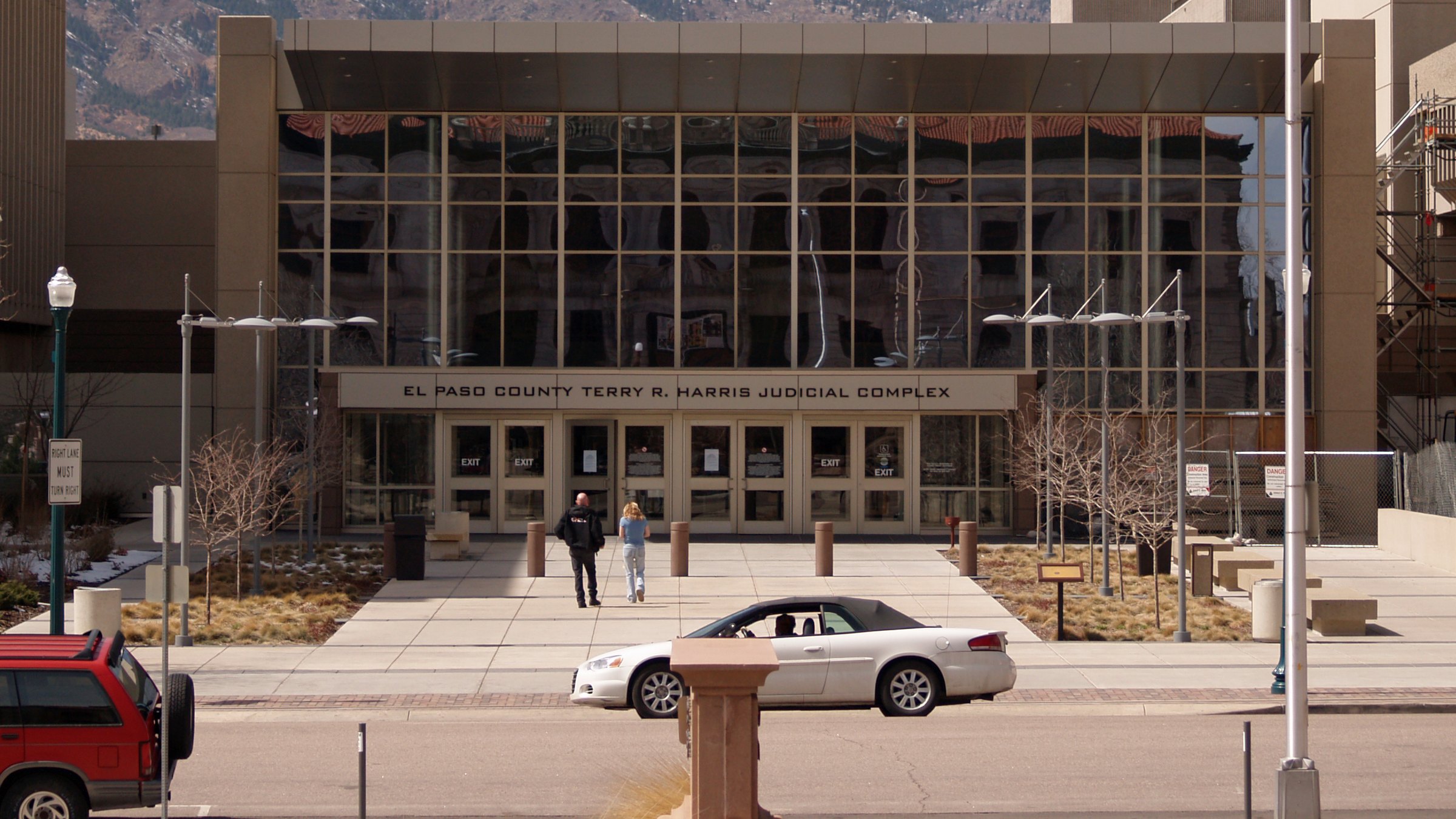
An arrest ends one kind of waiting and starts another. In El Paso County, nearly everyone arrested — whether in Colorado Springs, Fountain, Monument, or Manitou Springs — books into the El Paso County Criminal Justice Center (CJC) on East Las Vegas Street. In Teller County, arrestees go to the Teller County Jail in Divide — not Woodland Park, a detail that surprises nearly every family the first time.
First comes booking: fingerprints, photographs, records checks, a medical screening. It takes hours, and the person usually won’t appear in the sheriff’s online inmate locator until it’s finished. If you can’t find them yet, that alone doesn’t mean something is wrong — my inmate search guide walks you through where to look.
Then comes the bond. For many charges, a bond amount is available shortly after booking. For others, it’s set or reviewed at advisement — the first court appearance, where a judge informs the defendant of the charges and sets the conditions of release. Domestic‑violence cases run on their own track: Colorado generally requires the defendant to be seen by a judge before bond can be posted, which is why DV bonds can’t be rushed no matter who promises otherwise.
Once a bond amount exists, the family can act. That’s where the rest of this page comes in.
Colorado Springs, Fountain, Monument, and Manitou Springs all book here.
Not Woodland Park — the detail that surprises most families.
Names usually don’t show in the inmate locator until it’s finished.
Colorado generally requires a judge to see the defendant before bond posts.
The four ways bail is posted in Colorado
Colorado statute lays out four basic routes to release. Same destination — out of custody, with a promise to appear — four very different price tags.
| Bond type | How it works | Money up front |
|---|---|---|
| Personal recognizance (PR) | The defendant signs a promise to appear. Common for lower‑level charges since Colorado’s bail reforms. | None |
| Cash bond | Someone pays the entire bond amount to the jail or court. Refundable at the end of the case if every court date is made, less any court fees. | The full bond amount |
| Surety bond | A licensed bail agent posts the full amount for you; you pay the agent a one‑time premium. This is the bond Dave writes. | A percentage of the bond |
| Property bond | Real‑estate equity is pledged to the court instead of cash. Involves appraisals, court approval, and considerable patience. | Equity — and time |
If the court grants a PR bond, take the win — you don’t need me. The rest of this page is about the third row: the surety bond, which is what a bail bondsman provides and what most families use when the court sets a money bond larger than anyone can comfortably part with. You can see every kind of bond I write on the services page.
What a bail bondsman actually does
The court’s math is simple: it wants the full bond amount held as insurance that the defendant shows up. If the bond is $10,000, the court wants $10,000. Most families don’t keep that kind of cash within reach — and certainly not at 2 a.m. on a Saturday.
A bail bondsman solves that problem. As a licensed agent backed by a surety insurance company, I post the full bond with the jail on your behalf. You pay a one‑time premium — a percentage of the bond amount set by rates filed with the state, typically in the 10–15% range. Call for your exact quote; it’s the same number the state has on file, not something invented on the spot.
Be clear‑eyed about one thing: the premium is non‑refundable. It’s the fee for the service — putting up the full bond, carrying the risk, and doing it right now. It doesn’t come back if the charges are later reduced or dropped, and anyone who tells you otherwise is selling something.
So why do families use a bondsman anyway? Because the alternative is tying up the entire bond amount with the court for the life of the case — which can run months, sometimes years. A few hundred dollars now versus thousands locked away until the last gavel falls: for most people, that math settles itself. And Colorado bail agents are licensed through the state Division of Insurance, so the person you’re trusting at 2 a.m. is regulated, filed, and accountable.

What a co‑signer (indemnitor) agrees to
Most bonds need a co‑signer — the paperwork calls this person the indemnitor. In plain English: the co‑signer promises, through me, that the defendant will appear at every court date. It’s a guarantee with money attached.
If the defendant shows up every time, co‑signing costs nothing beyond the premium. Your obligation ends when the case ends and the court exonerates — formally releases — the bond.
The job runs the length of the case, not just the night of release. A good co‑signer keeps in touch with the defendant, knows when the next court date is, and says something early if the picture changes — a move, a lost job, a phone that stops being answered. Nobody expects you to babysit a grown adult; you are expected to know where they stand.
Signing up is simpler than it sounds. Plan on a photo ID, your current address and phone number, and basic work information — the standard facts behind any surety bond, handled in the same phone‑and‑online paperwork as the rest of the bond.
And it’s worth saying plainly: you’re allowed to say no. If your gut hesitates about whether someone will actually walk into that courtroom, an awkward conversation today costs far less than a forfeiture later. Ask every question you have before you sign — the bond amount, what the premium covers, what happens if a date slips — and sign only when the answers sit right.
The whole test fits in one sentence: co‑sign for someone whose word you trust.
Before you sign: if the defendant skips court and can’t be brought back, the co‑signer can be responsible for the full bond amount — not the premium, the whole thing — plus recovery costs. This is why I read through every line of the agreement with you before anything gets signed, at whatever hour we’re doing this. Nobody co‑signs confused on my watch.
Collateral: when it’s needed, what qualifies, when it comes back
Most everyday bonds don’t require collateral — a premium and a solid co‑signer are enough. Collateral enters the picture on larger bonds and higher‑risk situations, most often felony bonds, where the amount at stake justifies extra security.
What qualifies: things with verifiable value and clean ownership. Real‑estate equity, vehicle titles, sometimes cash held in trust. What doesn’t: estimates, promises, and your grandmother’s opinion of what the ring is worth.
“Held” is the operative word. Collateral secures the bond — it doesn’t get spent, sold, or moved while the case runs. A pledged title sits in a file, not on a used‑car lot; a lien on a house changes nothing about who lives there. Pledging something and losing it are two very different events, and the second one only follows a skipped court date that can’t be put right.
When it comes back: at exoneration — when the case concludes and the court formally releases the bond. Not at the first hearing, not when things “look good.” If collateral is part of your bond, I’ll tell you before you pledge anything exactly how that timeline tends to run.
Whatever you pledge, get it in writing and keep your copies — a description of the item, its agreed value, and the condition for its return. Then ask two questions and expect straight answers: what document creates the claim, and what has to happen before it’s released. If the answer to the second one isn’t “exoneration,” keep asking.

How long everything takes
Honest answers, because you’ll find plenty of dishonest ones elsewhere.
The bond side of this moves as fast as you can answer questions. The paperwork — application, agreement, and payment — usually takes under an hour, most of it handled by phone and online. Then I post the bond at the jail myself, filed directly with the bond desk at the CJC in the Springs, the Teller County Jail in Divide, or a county jail anywhere else in Colorado.
You can shorten your side of the clock before you ever dial. Have these ready when you call:
- The defendant’s full legal name and date of birth
- Which facility is holding them — the CJC in the Springs or the jail in Divide
- The booking number if you’ve found it — helpful, but not required
- The charges and bond amount, if they’ve been set
The release side belongs to the jail, and no bondsman controls it. Once the bond is posted, release processing takes hours — it’s the jail’s call, driven by intake volume and shift changes, and evenings and weekends run slower. The CJC works through its booking traffic; the smaller facility in Divide keeps its own rhythm.
Anyone quoting you an exact minute count is guessing. What I can promise instead: a straight estimate based on the facility, the hour, and nearly three decades of watching those doors open.

If court gets missed
Missing a court date — a failure to appear, or FTA — is the one way this goes genuinely sideways. The judge can issue a bench warrant, revoke the bond, and begin forfeiture: the process of making the full bond amount come due for real.
For the defendant, that means arrest on sight and a much harder conversation about bond the second time around. For the co‑signer, it means the exposure described a few sections back stops being theoretical.
Here’s the part worth remembering: an FTA handled in hours is a very different problem from an FTA ignored for weeks. Courts can tell the difference between a missed alarm and a person on the run. If a court date slips, call me immediately at (719) 499-7787, whatever the hour — in many cases the appearance can be reset and the bond preserved when we move fast. Already past that point? The warrants & FTA page covers rebonding and walk‑through turn‑ins, which can turn days in custody into hours.
And if there was a real reason — a hospital stay, a car that gave out on the highway, a hearing notice mailed to an old address — save the proof. Discharge papers, the tow receipt, the misdelivered envelope: documentation is what turns a missed date into a resettable one. Judges hear explanations all day; what they see far less often is evidence. Bring some, and the conversation about putting the bond back on track gets considerably easier.
Ten terms, translated
The system speaks in jargon. Consider this the decoder ring.
Bond
The court’s insurance policy: an amount of money guaranteeing the defendant returns to court. Post it, and they’re released while the case proceeds.
Premium
The one‑time, non‑refundable fee paid to a bail agent for posting the full bond — a percentage set by rates filed with the state.
Indemnitor
The co‑signer. The person who guarantees the defendant’s appearance in court and accepts financial responsibility if they skip.
Advisement
The first court appearance, where a judge informs the defendant of the charges and sets or reviews the bond and its conditions.
PR bond
Personal recognizance: release on a signed promise to appear, with no money required. Common for lower‑level charges in Colorado.
Surety
The insurance company standing behind a bail agent’s bonds — the reason a bondsman can post amounts far larger than any one person could.
Exoneration
The court formally releasing a bond when a case concludes. The finish line: obligations end and collateral comes back.
Forfeiture
What happens to a bond after a missed court date: the court moves to collect the full amount. The outcome everyone is working to avoid.
Remand
Being taken back into custody — for instance, after a bond is revoked. The opposite direction of everything else on this page.
FTA
Failure to appear: missing a required court date. Triggers a warrant and puts the bond — and the co‑signer — at risk.
Still have questions? The FAQ answers the twenty‑two most common ones — or skip the reading and call (719) 499-7787.
Now you know how it works.
Here’s who to call.
If someone’s in custody in El Paso or Teller County — or anywhere in Colorado — the release starts with one phone call, any hour, any day.
Colorado Springs · Woodland Park · Statewide · On call 24/7